
The 2026 Iran-War Series · Part 7 of 9
What the War Produces
How the Gulf conflict ends, and what it leaves behind
March 19th, 2026
Three weeks into the war, it has become clear to most serious analysts that the American strategy — if there was one — has failed.
Yet most analyses that reach this conclusion stop short at two points. They fail to examine the conflict from inside the logic of the Iranian regime. And they fail to ask the question that follows from failure: if the strategy has not worked, what does the end-state look like?
These two gaps are connected. Without the first, the second cannot be answered. This essay tries to address both.
The previous essays in this series described what the war feels like from inside the region, why expatriate confidence is the most overlooked economic variable in the Gulf, why the American strategy was structurally flawed, and why the intelligence system that produced the decision to strike could not measure the variables that determined the outcome. The most recent essay proposed that the target may have designed the strike itself, that Iran’s leadership chose to be where the missiles would land, because the strategic value of their death exceeded the value of their survival.
This essay builds on those arguments. The question here is not why the war started, or why it is failing, but what it produces. Not what happens next week, but what order emerges when the firing eventually stops.
The structural analysis that follows can stand on its own. But it is deepened by the interpretive claims made in the earlier essays.
The Inversion #
Every Western analysis of this war begins from the same assumption: Iran is under attack and must decide how to respond. The evidence assembled in this series suggests a different reading. Iran may have entered this war having already prepared the outcome it needed. The war is not something that happened to Iran. It is something Iran appears to have converted into strategic advantage.
Understanding why requires recognising a difference in time horizons. Iran is one of the oldest continuous civilisations on earth, with a strategic culture that thinks in decades and centuries rather than electoral cycles. The Karbala narrative that shapes Shia political theology is fourteen hundred years old and functions not as historical memory but as a living operational principle: a leader goes forward knowing what awaits him, because the act itself is the answer. This does not mean every Iranian decision flows from Karbala. It means the decision architecture available to Iranian leaders includes options that Western cost-benefit analysis does not recognise as rational. A system shaped by that tradition may not experience a three-week bombardment the way a system calibrated to quarterly earnings calls does.
The mechanism begins with what this essay calls the catch-22.
In the weeks before 28 February, the United States completed its largest military buildup in the Middle East since 2003. The buildup was intended as deterrence. Its effect was the opposite. American bases across the Gulf were not only projections of power. They were targets. Every installation housing American personnel gave Iran a way to draw the United States into any conflict, regardless of what Washington intended. Deterrence works only when the adversary wants to avoid what you threaten. When the adversary wants the confrontation, deterrence becomes invitation.
Iran did not need to attack the United States directly. It needed only to present Israel with an opportunity that Israeli doctrine made non-refusable: the country’s full senior leadership, assembled at a known location, at a moment when military tensions were at their peak. Israel identified the opportunity and brought the intelligence to Washington. The decision was taken by a president operating with a downsized National Security Council, with dissenting voices blocked from the briefing room, and under direct personal pressure from the Israeli prime minister.
Joe Kent, the former director of the National Counterterrorism Center, confirmed publicly after his resignation this week that the imminent threat cited by the administration did not come from Iran. It came from the expectation that Israel would strike and Iran would retaliate against American bases. Secretary of State Rubio said as much when he described the threat assessment. The threat came from the ally, not the adversary. The United States pre-empted a retaliation that would not have occurred without the attack it chose to join. Even had it declined, Iranian retaliation against American bases would have guaranteed eventual involvement. The fallback was never needed.
Versions of the same pattern recur in Western strategic history: Pearl Harbor, or the political mandate created by September 11. A leader or a system that benefits from an attack because the response it generates is worth more than the damage sustained. The difference here is the scale of personal sacrifice. The strategic architecture is identical.
The reason this inversion is missed by most analysts is an epistemological failure described in the previous essays. There is a mathematical law, proven in 1945, that places a hard limit on what can ever be known from data. Western intelligence systems cannot measure intention, belief, patience, or the willingness to sacrifice, because the data they collect contains no information about those variables. More satellites and faster computers process the same data more quickly; they do not collect different data. Kent’s resignation confirmed this empirically: the NCTC director was excluded from Iran briefings, the NSC had been downsized, pre-war assessments warning against military action were ignored, and the experienced diplomats and intelligence officers who understood the region had been removed from the room. The definition of success resided in presidential intuition: “When I feel it,” Trump told Fox News. “Feel it in my bones.”
Power only counts when others are willing to adjust their behaviour to it. That willingness, call it permission, is not given to the strongest party but to the most predictable one. Iran, whatever else it is, has been strategically consistent for decades. The United States, in the eyes of the region, has not. That asymmetry matters more than any missile count.
For Iran, the war is the solution. Everything that follows must be read through that lens.
What Iran Has Already Achieved #
Most end-state analyses begin by asking what Iran wants. The question assumes Iran is negotiating from a position of damage. The evidence suggests otherwise. Iran does not need to negotiate its minimum conditions. It has already achieved them.
The fatwa against nuclear weapons appears to have died with its author. Ali Khamenei’s theological prohibition was issued from personal authority that no successor inherits. A new supreme leader carries the institutional power of the office without the individual religious commitment. The nuclear path that was closed for decades is now, at minimum, open to reinterpretation.
The succession is cleared. Every potential rival to Mojtaba Khamenei was present at the meeting. The American president himself stated that the strike “knocked out most of the candidates.” He presented this as success. It was, at best, the opposite.
The highly enriched uranium is secured. Four hundred kilograms were relocated from Fordow nine months before the strikes, in June 2025. By the morning of the attack its location was unknown to the IAEA, to the United States, and possibly to all but a handful of individuals inside Iran. The foreign minister now says it lies “under the rubble.” Nine months of preparation is design, not improvisation. The HEU does not need to be assembled into a weapon to function as one. Iran can now exploit uncertainty about the HEU in both directions: by implying possession and by obscuring it.
Domestic legitimacy is restored. In January 2026, Iran experienced the largest protests since the Revolution. The regime was killing its own citizens. Then the strike came. Martyrdom replaced dissent. Kent, himself no friend of the Iranian regime, confirmed the dynamic: killing Khamenei caused people to rally around the system, not against it.
Operational continuity held. Three weeks after the decapitation strike, Iran continues to launch missiles and drones against Israel, all six Gulf states, Iraq, Jordan, Cyprus, Turkey, and Azerbaijan. Eleven countries. Command structures function. Retaliation is coordinated. This is not what a defeated system produces. End-states are negotiated with adversaries that can still fight.
And the off-ramps are being destroyed. Israel is systematically killing the pragmatic figures within the Iranian leadership who might have negotiated. Ali Larijani was killed on 17 March. Intelligence minister Esmail Khatib the following day. As one Princeton scholar observed, the United States has supported Israel in eliminating the very people through whom a diplomatic solution might have been reached. Each killing closes an exit. The harder Washington searches for an endgame, the fewer people remain alive to deliver one.
What the World Must Accommodate #
If Iran has already achieved the core of what it needed, the question for the rest of the world is not what to offer Iran in exchange for peace. It is what realities must now be absorbed into whatever order follows.
The first is nuclear ambiguity as a permanent condition. Iran will not give up the HEU. No treaty can substitute for the security that its own capability provides. The JCPOA was multilateral and UN-backed; the United States walked away. The Oman negotiations were active when the bombs fell. Iran’s security will rest on its own capacity, the same model Israel has maintained for decades: never confirm, never deny, let the ambiguity do the work.
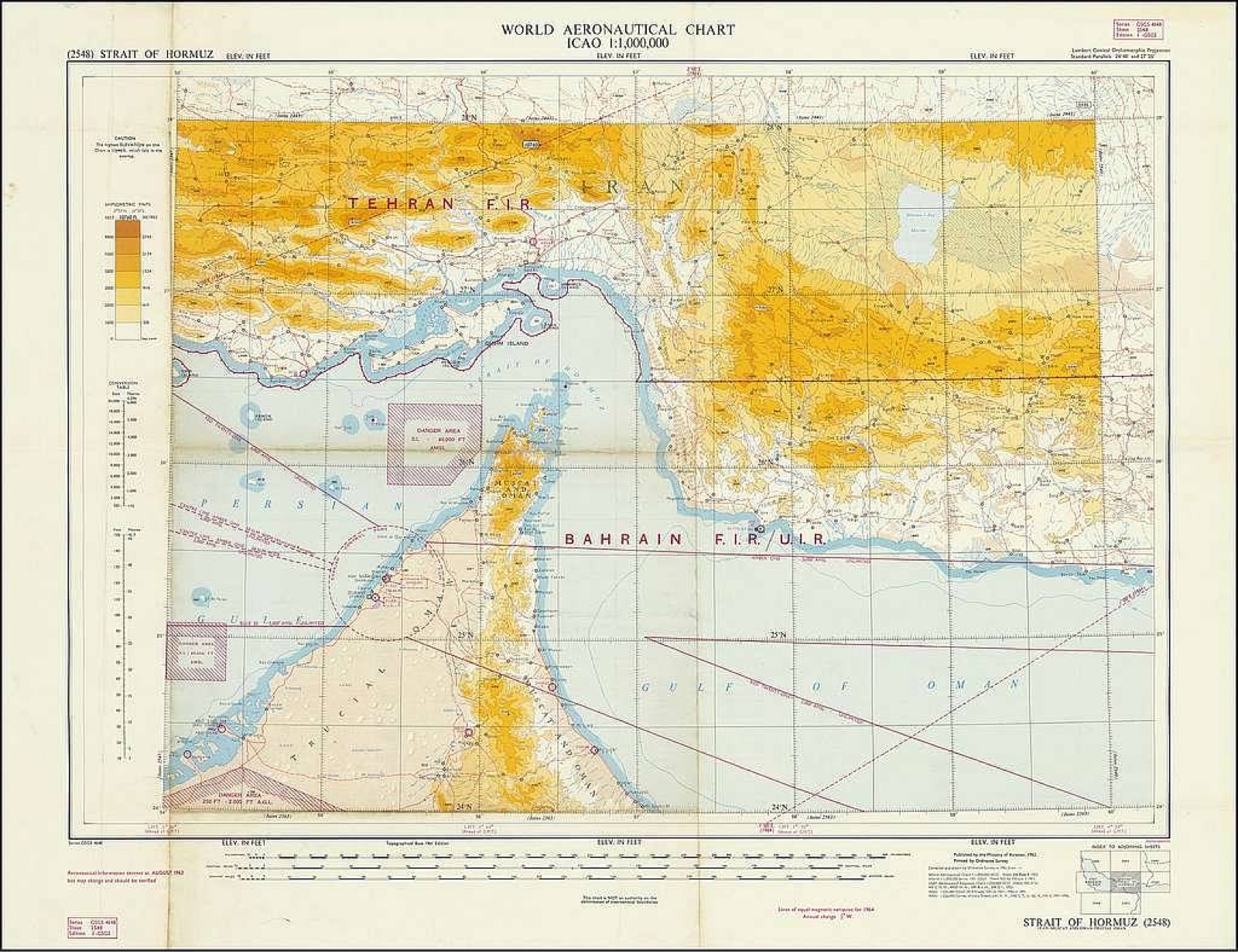
The second is China as Iran’s primary economic partner. A country under sanctions with destroyed infrastructure needs a reconstruction pathway outside the American financial system. Russia lacks the scale. India has, at this moment, disqualified itself through its alignment with the United States and Israel. China is the only candidate with the trade relationship, the investment appetite, and the willingness to operate outside Western financial channels. The evidence is already visible: roughly two million barrels per day continue to transit the Strait of Hormuz, almost exclusively bound for China. The strait is not simply closed. It is being used selectively, and Iran appears able to influence who passes.
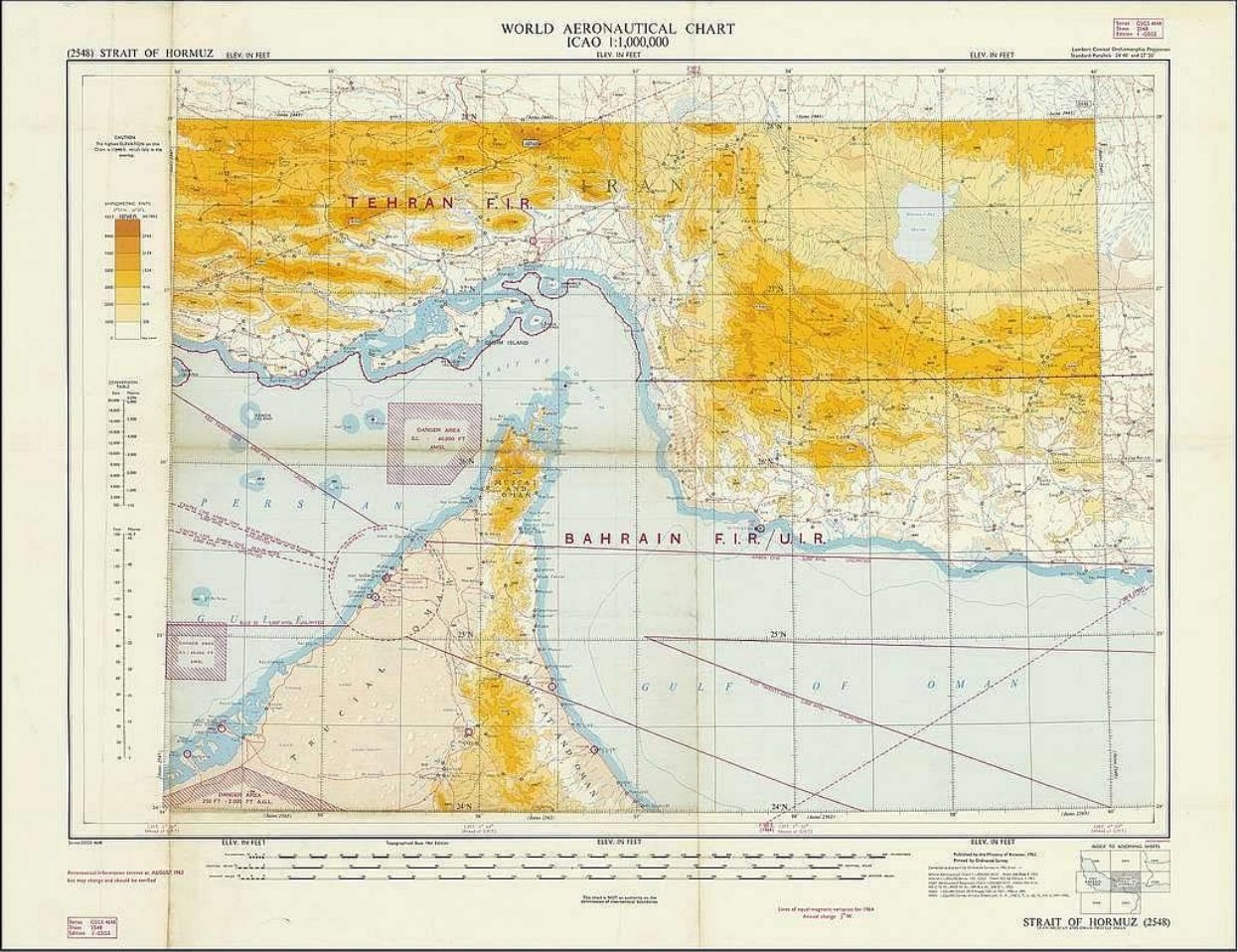
The third is the Strait of Hormuz as bargaining instrument rather than end-state. The most powerful navy in the world operates in adjacent waters, and the strait remains effectively closed to most traffic. Iran does not need to defeat the US Navy. It needs only to make the resumption of ordinary shipping uncertain enough that the world must negotiate rather than wait.
The fourth is the broader Gulf energy system as a zone of managed uncertainty. The attacks on oil and gas infrastructure in Saudi Arabia, Qatar, and the UAE this week extend the Hormuz logic onto land. Iran does not need to destroy the Gulf’s energy system. It needs only to keep insurance premiums elevated, investors hesitant, and governments adjusting. Expatriate confidence, the variable at the heart of this series, is shaped not by whether missiles land but by whether the system feels predictable.
Four Scenarios #
The end of this war will not be a single event. It will be a settlement, explicit or implicit, that reflects the balance of leverage, exhaustion, and interest among the parties. Four scenarios define the possibility space.
China-facilitated de-escalation
The most likely outcome. The American political clock (midterms, oil above a hundred dollars, rising domestic opposition, service members coming home in coffins) is ticking faster than Iran’s willingness to endure. China is the only actor with leverage on both sides: Iran’s largest future oil buyer, and a trade counterpart that Washington needs for other reasons. The prospect of the April summit between Trump and Xi, now uncertain precisely because of the war, gives both sides something to lose. The mechanism is already visible: China’s special envoy is touring the region, and Chinese pressure has persuaded Iran to stop targeting tankers. The likely shape: Hormuz reopens under a Chinese-guaranteed passage framework, the US claims military degradation as victory, Iran claims survival, and the HEU disappears into a diplomatic grey zone.
Through the Iranian lens: optimal. Everything that mattered has been achieved.
Exhaustion stalemate
The Korean precedent. No deal, no decisive outcome, no formal peace. An armistice without a treaty. This collapses eventually into the first scenario, but over months rather than weeks, and at far higher cost.
Through the Iranian lens: acceptable. The strategy was built for endurance.
Nuclear threshold cascade
Iran crosses the threshold openly. Saudi Arabia calls Islamabad. Pakistan’s defence minister has confirmed availability. Turkey, Egypt, and the UAE make their own calculations. The IAEA director’s warning of twenty to twenty-five nuclear-armed states moves from projection to trajectory.
Through the Iranian lens: not preferred, but the ultimate backstop. The HEU exists for this scenario. The war provides the justification: a country attacked during active negotiations has no remaining moral obligation to stay non-nuclear.
Internal fragmentation
The scenario Washington hopes for and has the fewest instruments to produce. Mojtaba Khamenei fails to consolidate. The Revolutionary Guard dominates but loses theological legitimacy. Trump has invoked the Venezuela model, but Iran’s decentralised command structures bear no resemblance to Venezuela’s.
Through the Iranian lens: the scenario the pre-war preparations were designed to prevent. The succession was cleared by the strike. The legitimacy crisis was resolved by martyrdom. If the thesis from the previous essay is correct, this scenario was strategically pre-empted.
In all four scenarios, the structural direction is the same. American influence in the region diminishes. China’s position strengthens. The non-proliferation architecture degrades. The scenarios differ in speed and cost, not in direction.
Who Builds the Architecture #
The war will end. What follows depends on who builds the post-war order: not through a peace conference but through the relationships and dependencies that define how the region actually works.
China is the only actor with leverage on both sides simultaneously. Forty-five percent of its oil imports transit the Strait of Hormuz, which makes regional stability an economic necessity rather than a policy preference. China does not need to choose the role of regional architect. It acquires it by protecting its own interests. Every diplomatic action since the war began is presented as self-interest; the mediating position is a byproduct. Positions built on shared economic interest tend to outlast those claimed by political decree.
India has the scale, the energy dependence, and the domestic exposure to make this war more than a foreign-policy issue. But Modi’s visit to Israel three days before the strike, and India’s refusal to condemn the attack, have cost it the trust that would make those assets usable as leverage. The disqualification is not permanent, but it is likely too late for this conflict.
The United Nations is blocked by the American veto and cannot offer Iran the one thing it requires: credible security. The JCPOA was UN-endorsed; a permanent member violated it. The US might prefer a UN process to prevent China from becoming the post-war architect, but the UN requires explicit language, and nuclear ambiguity is far easier in a bilateral arrangement where nothing needs to be written down.
The most likely outcome is layered. China facilitates the de-escalation and the concrete arrangements. The United Nations provides a framework afterward, vague enough for everyone to save face. China does the work. The UN provides the label.
What the War Leaves Behind #
The dynamics described above are self-reinforcing. The United States joined the strike to pre-empt a retaliation that the strike itself caused. The war was launched to prevent nuclear proliferation; it has destroyed the architecture that constrained it. Iran provides drones to Russia, Russia shares intelligence with Iran, and the United States lifts Russian oil sanctions to contain the resulting energy crisis, funding Russia’s war against Ukraine with the proceeds. Israel continues killing the Iranian leaders who might negotiate, closing the exits that the United States needs open. Every action produces consequences that undermine the objective it was supposed to achieve.
These circles will leave permanent marks on the international order.
The architecture of the five permanent members of the Security Council assumed mutual constraint. That assumption has collapsed. One permanent member launched a war without mandate during active negotiations. A second provides intelligence to the adversary. A third positions itself as post-conflict architect.
The Non-Proliferation Treaty rested on a bargain: forgo weapons in exchange for security guarantees. The war has demonstrated that those guarantees are worthless when the guarantor decides to strike. Mohammed bin Salman committed publicly to acquiring nuclear weapons if Iran does. Pakistan confirmed availability. The transfer would be measured in weeks.
The Gulf states, attacked as collateral damage of a war they did not seek, will look for security partners beyond Washington. The Saudi-Iran détente was already brokered by China. The war accelerates a diversification that had already begun.
The United States does not lose military supremacy. It loses the architecture that made supremacy useful: the alliances, the legitimacy, the institutional trust that converted military power into political order. The Strait of Hormuz remains effectively closed despite the most powerful navy in the world operating in adjacent waters. That may be the threshold this war marks: the moment when the ability to destroy ceased to imply the ability to restore.
China does not become the new hegemon. It becomes the actor that holds the positions that matter: economic relationships with both sides, diplomatic credibility earned by not bombing anyone, and the role of energy guarantor that follows from protecting its own supply.
This war may also reveal something about the future of defence itself. Mass drone and missile warfare is proving easier to sustain than effective, affordable defence against it. Cheap, mass-produced drones are scaling faster than the expensive systems designed to intercept them. From inside Abu Dhabi, the system does not feel degraded. Yesterday I sheltered five times.
And beneath all of this lies the question of permission. Holding a position of power is not the same as being accepted in it. Permission, the willingness of others to depend on you because your interests are aligned with theirs, grows through consistency and disappears through opportunism. The United States lost it through a pattern that stretched over years: the JCPOA abandoned, the Oman negotiations betrayed, allies unconsulted, partners treated as collateral damage. China receives it not because anyone trusts Beijing, but because Chinese and Gulf economic interests point in the same direction. Not affection. Arithmetic.
But permission can be revoked. China inherits complexity it has never managed. If it treats the region as a resource to extract rather than a system to maintain, the same pattern that revoked American permission will revoke Chinese permission. The question this essay leaves open is not whether China has the position. It does. The question is whether it will earn the right to keep it.
Conclusion #
On a balcony overlooking the Gulf, a drone passed at eye level. A thin mechanical buzzing. Almost mundane. That was how the first essay in this series began.
Three weeks later, the drones still come. Yesterday I sheltered five times. The question that emerged in that first basement conversation is still being asked across the region. It was never just about one family. It was about the architecture of trust that makes a place worth building a life in.
We could see the drone. We could track its flight path. We could not measure the decision that launched it. There is a mathematical law, proven in 1945, that places a hard limit on what can ever be known from data. The most sophisticated intelligence system in human history collected data that carried no information about the variables that determined the outcome. The mathematics told us so. We chose not to listen.
This essay is not about who won this week. It is about who will shape the order that follows. The war does not end when the firing stops. It ends when a new architecture of relationships, tolerated ambiguity, and quietly granted permission has settled into place. That architecture is already forming. Not in Washington, which still searches for targets. Not at the United Nations, which waits for a framework to ratify. But in Beijing, which is building the relationships that will define the region after the last missile has been intercepted.
And in a room whose location no government knows, a man who inherited a system designed to outlast any attack is breathing quietly in the dark.
He only had to breathe. The rest was already in motion.
Previous essays in this series #
1. The Overlooked Risk Behind the Gulf Conflict
Why expat confidence may matter more than whether missiles landed. The first essay describes the experience of missile alerts in Abu Dhabi and argues that the quiet departure of expatriate professionals is the most consequential and most overlooked risk of the Gulf conflict.
outdoorconnect.ae/the-overlooked-risk-behind-the-gulf-conflict
2. The Network the UAE Already Has
Why rebuilding expat confidence requires activating a trust network, not launching a campaign. Proposes mobility credits as a precision instrument to convert the UAE’s existing expatriate base into a distributed confidence infrastructure.
outdoorconnect.ae/the-network-the-uae-already-has
3. When Strategies Fail
How the United States entered a war it could not strategically win. Introduces the distinction between assets and control points and argues that Iran reframed the conflict as an endurance contest the US was not equipped to win.
outdoorconnect.ae/when-strategies-fail
4. The Silent.
A work of strategic fiction. A wounded leader in a hidden room, four visitors, and a decision that was always coming. Explores the logic of Iran’s nuclear decision through narrative, and asks what happens when a system is designed to outlast the attack that destroys its leader.
5. When Knowledge Systems Collide
Why the war the United States is losing was lost before it began. Argues that a mathematical law places a hard limit on what intelligence systems can know, and that the variables that determined the outcome of this war — intention, patience, belief, willingness to sacrifice — fall outside that limit.
outdoorconnect.ae/when-knowledge-systems-collide
6. The Last Meeting
What if the target designed the strike? Examines the evidence that Ali Khamenei knew the attack was coming and chose to stay, using the predictability of the American and Israeli decision model as a weapon. Proposes that Iran’s leadership may have engineered the conditions that produced exactly the outcome it needed.
outdoorconnect.ae/the-last-meeting
Cite this piece
Schotman, R. (2026). What the War Produces. Outdoor Connect. https://outdoorconnect.ae/library/what-the-war-produces/
© Outdoor Connect 2026. All rights reserved. Quote with attribution. Use and attribution