
The 2026 Iran-War Series · Part 8 of 9
The Art of the Deal
How the self-proclaimed dealmaker destroyed his own deal.
Essay 8 in the Gulf Series
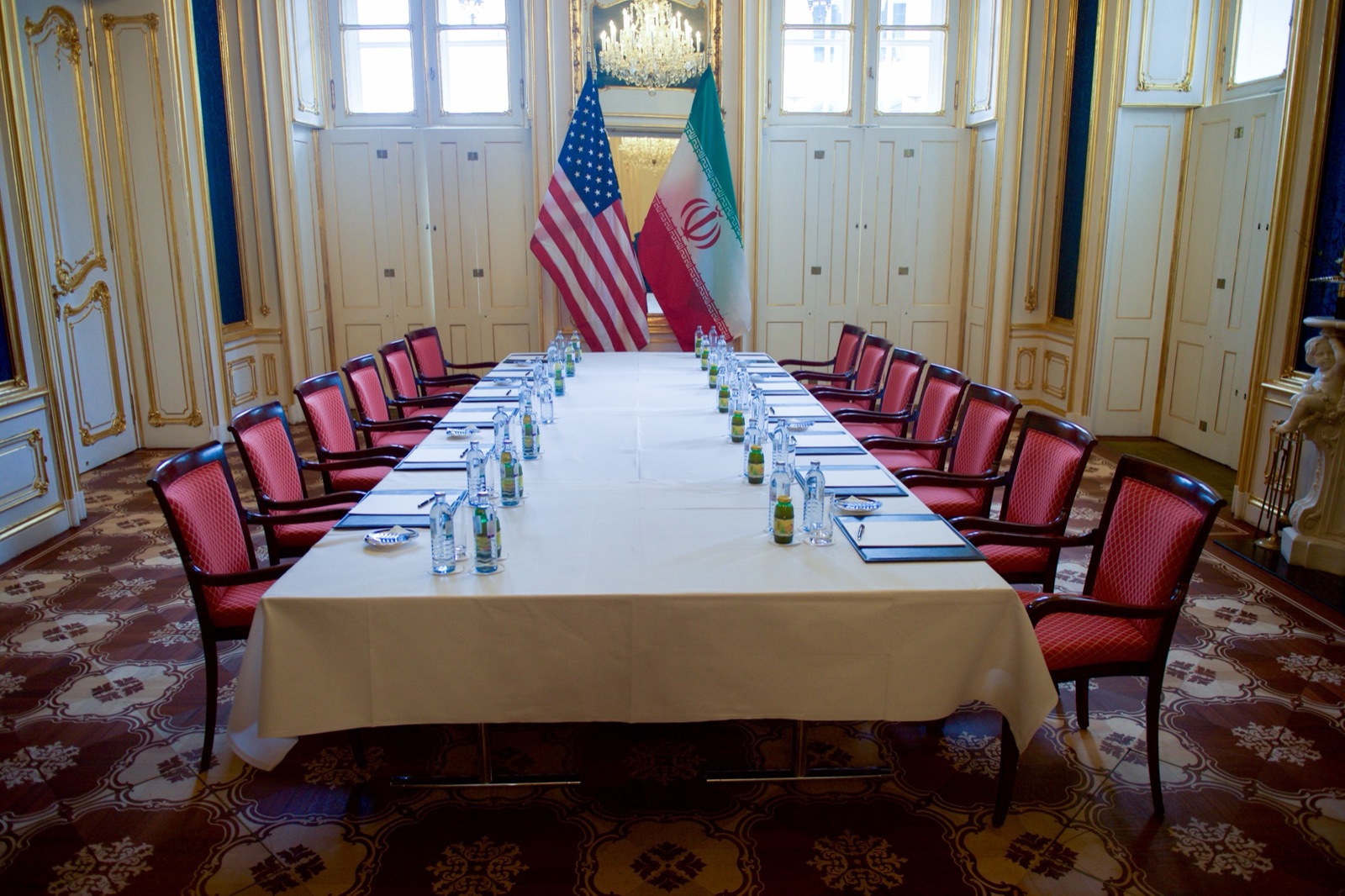
Donald Trump calls himself the greatest dealmaker of his generation. His supporters believe it. His book defined it. This essay tests it.
The claims are public record. He would resolve the war in Ukraine within twenty-four hours of taking office. Canada would become the fifty-first state of the Union. Greenland would be purchased from Denmark. Regime change in Venezuela would follow from American pressure. Tariffs would force the world’s trading partners into submission. The Abraham Accords delivered peace to the Middle East. He has publicly stated that Norway committed an injustice by not awarding him the Nobel Prize for Peace.
And now Iran. He would do what no president before him had dared: destroy the threat of the Islamic Republic once and for all. The deal that would define his legacy.
If even half of these claims were true, Trump would be the most consequential negotiator in modern geopolitics. His own book, The Art of the Deal, is the work he presents as his intellectual masterpiece, the anchor of his public identity, the proof of his genius. It provides the standard. So let us measure him against his own principles.
His Own Rules #
In 1987, Trump published The Art of the Deal. It became the book that built his reputation. Its principles are clear and, in the abstract, sound. Four of them bear directly on the conflict in the Gulf.
- Maximise your position. Know what you hold. Use your strongest cards to extract the best terms.
- Protect your downside. Before chasing a big win, make certain you survive if it fails.
- Be willing to walk away. The negotiator who cannot leave the table has already lost.
- Keep your options open. Alternatives are power. Without them, you have no position.
These are the rules Trump set for himself, in the book he defined as his magnum opus. So let us apply them.
The Hand He Held #
Until late February 2026, the United States held the strongest negotiating position against Iran in a generation. By every measure in Trump’s own book, this was a position of maximum strength.
Heavy sanctions constrained the Iranian economy. The Oman channel was open and direct communication was active. The fatwa against nuclear weapons remained formally in force. A credible American military threat functioned as a deterrent without needing to be used. After the Twelve-Day War in June 2025, both sides understood the reach and the limits of American air power. But Washington had not yet committed to full-scale war. The threat retained its value precisely because it remained a threat.
Iran’s alternatives were limited. China was cautious. Russia was constrained by its own wars and sanctions. Europe was weak. The only path to economic relief ran through Washington. The Strait of Hormuz was open. The four hundred kilograms of highly enriched uranium had already been relocated from Fordow nine months earlier, in June 2025, to an unknown location. That fact alone should have increased the urgency to negotiate, not to bomb. The window was narrowing. A dealmaker would have recognised that.
Trump’s alternative to a deal was strong: maintain the status quo, sustain sanctions, and let the military option serve as deterrent. Iran’s alternative was continued suffocation. This was the moment to negotiate. From strength. With options. With a counterparty that had every reason to come to the table.
Tested by His Own Rules #
On 28 February 2026, the United States and Israel struck Iran. What followed can be measured precisely against the four principles Trump defined as the foundation of successful negotiation.
Maximise your position. A card held is a card that shapes behaviour. A card played is a card spent. The military threat was most powerful as a threat. The moment the first bombs fell, the deterrent was consumed. Iran had already calibrated the limits of American air power during the Twelve-Day War. The February strikes confirmed what Iran already knew.
Worse: before the war, the Strait of Hormuz was open. It had been Iran’s latent capability for decades. Every serious military planner knew it. War games had modelled it for years. The geography is an open book: a strait thirty-three kilometres wide, lined with Iranian coastal batteries and missile positions. By launching the attack, Trump gave Iran the reason to activate that capability. Iran did not merely play its Hormuz card. It tested it, proved it works, and strengthened it. Before the war, Hormuz was a theoretical threat. Now it is a demonstrated fact that will shadow every future negotiation with Iran for decades. Trump did not fail to maximise his position. He destroyed it and armed his opponent in the process.
Protect your downside. The war was launched without an exit strategy. No coalition shares the burden. No United Nations mandate provides legitimacy. No broad regional participation extends beyond defensive measures. The National Security Council had been stripped of dissenting voices before the decision was taken. Joe Kent, the former director of the National Counterterrorism Center, resigned after being excluded from Iran briefings. Pre-war assessments warning against military action were ignored. The definition of success resided, by the president’s own account, in intuition: “When I feel it. Feel it in my bones.”
None of this was unforeseeable. Every risk that has materialised was identified in advance by the people who were removed from the room before the decision was taken. In the language of his own book: he chased the biggest possible win without ensuring he could survive if it failed. It is failing. And there is no structure in place to absorb what follows.
Walk away. Trump cannot walk away. Withdrawal without a deal equals political defeat. Rising energy prices, American casualties arriving at Dover Air Force Base, collapsing approval ratings, and approaching midterm elections create a political clock that ticks faster than Iran’s willingness to endure. Iran can wait. Trump cannot. The moment Iran understood that the president who launched the war could not afford to leave the table without a victory, the dynamic inverted permanently. The negotiator who cannot walk away has already lost. By his own definition.
But it is worse than that. Even if Trump could walk away, it would not end the war. Israel has stated publicly that it will not stop. Netanyahu operates in a logic that is independent of Washington’s political calendar. And Iran has no incentive to reopen Hormuz the moment American pressure eases. Why would it surrender its strongest card at the moment its opponent retreats? The Strait becomes more valuable, not less, as the pain accumulates. Trump cannot stay, because staying produces no result. He cannot leave, because leaving changes nothing. He cannot negotiate, because no deal exists that both sides can accept. He has locked himself into a situation of his own creation where every door leads to another room he also built. That is not strategy. That is captivity.
Keep your options open. Every week of war narrows the options that remain. China has stepped into the space the United States vacated, offering Iran what Washington structurally cannot: an economic relationship without regime-change conditions and security through shared commercial interest. Two million barrels of oil per day continue to transit the Strait, almost exclusively bound for China. The Strait is not closed. It is selective. Iran decides who passes. The signals were already visible before the war. At Davos in January, Europe began building alternatives to American predictability. Allies were hedging. An attentive negotiator would have read those signals as a narrowing window. Trump read them as confirmation that his pressure was working.
Meanwhile, the pragmatic Iranian figures through whom a diplomatic solution might have been reached are being systematically killed by Israeli strikes. Ali Larijani. Esmail Khatib. Each death closes an exit that Trump needs open. The alternatives that his own book tells him to protect have been destroyed, not by Iran alone, but by the compounding consequences of his own decisions.
Even if Trump had followed these four rules perfectly, his method would still not have produced a deal.
His negotiation style is built for extraction, not agreement. It assumes the counterparty will fold. If the other side has not lost enough, there was still something left on the table. That logic works against a contractor in Atlantic City who has no choice but to accept reduced payment. It does not work against a civilisation that has spent decades preparing for exactly this confrontation, that defines endurance as victory, and that holds the control points the American military cannot neutralise. Trump’s method does not fail because he applied it badly. It fails because it is designed to produce capitulation. And when the counterparty does not capitulate, the method has no second act.
In January, Trump held the hand every negotiator dreams of. By March, he had played every card and held nothing.
No Deal #
The negotiating space no longer exists. What Trump can now offer Iran is worse than what was available before the war. What Iran would now accept is less than what Trump can politically deliver at home. These two positions do not overlap. There is no zone of possible agreement.
Before the war, this was a negotiation in which both sides could gain. Now it is a zero-sum contest in which only one side can prevail. In that contest, Iran holds the control points that determine endurance: Hormuz as a proven and strengthened instrument of pressure, nuclear ambiguity as a permanent condition, China as an economic guarantor outside the American financial system, and domestic legitimacy restored through martyrdom. The United States holds the assets that produce destruction. But destruction without control points does not produce order. It produces activity.
William Hague, the former British Foreign Secretary who himself negotiated the JCPOA with Iran, observed this week that a deal is now harder than before the war. That Iran will not surrender its enriched uranium. That the Strait of Hormuz has revealed a strength Iran had never previously tested. And that Trump will face, within days or weeks, a choice between escalation and retreat.
Hague stopped short of the conclusion his own analysis implies. That is perhaps what former foreign secretaries do. But the logic does not stop where the commentary does. A dealmaker who cannot offer what the other side will accept, and cannot accept what the other side will offer, is not in a negotiation. He is in a trap of his own construction.
The Ghost Behind the Book #
There is a final fact that reframes everything that came before it.
Tony Schwartz wrote The Art of the Deal. Not co-wrote. Wrote. In the years after publication, Schwartz publicly distanced himself from the book that made Trump’s reputation. He stated that Trump did not write it, that his attention span was too short to articulate the principles it contains, and that the portrait of the brilliant dealmaker was a construction, authored by one man and adopted as identity by another.
The intellectual masterpiece that Trump presents as the anchor of his public identity was never his. The principles were written by someone else. The dealmaker was a narrative. This essay tested that narrative against reality and found nothing behind it. Four principles, four violations, and a method that cannot produce what it promises.
The whole world is watching as the bluff collapses, not in a boardroom, but on a battlefield. A dealmaker who cannot win, cannot stop, and cannot negotiate has run out of moves from his own book.
What comes next is not in any book.
1. The Overlooked Risk Behind the Gulf Conflict
Why expat confidence may matter more than whether missiles landed. The first essay describes the experience of missile alerts in Abu Dhabi and argues that the quiet departure of expatriate professionals is the most consequential and most overlooked risk of the Gulf conflict.
outdoorconnect.ae/the-overlooked-risk-behind-the-gulf-conflict
2. The Network the UAE Already Has
Why rebuilding expat confidence requires activating a trust network, not launching a campaign. Proposes mobility credits as a precision instrument to convert the UAE’s existing expatriate base into a distributed confidence infrastructure.
outdoorconnect.ae/the-network-the-uae-already-has
3. When Strategies Fail
How the United States entered a war it could not strategically win. Introduces the distinction between assets and control points and argues that Iran reframed the conflict as an endurance contest the US was not equipped to win.
outdoorconnect.ae/when-strategies-fail
4. The Silent.
A work of strategic fiction. A wounded leader in a hidden room, four visitors, and a decision that was always coming. Explores the logic of Iran’s nuclear decision through narrative, and asks what happens when a system is designed to outlast the attack that destroys its leader.
5. When Knowledge Systems Collide
Why the war the United States is losing was lost before it began. Argues that a mathematical law places a hard limit on what intelligence systems can know, and that the variables that determined the outcome of this war — intention, patience, belief, willingness to sacrifice — fall outside that limit.
outdoorconnect.ae/when-knowledge-systems-collide
6. The Last Meeting
What if the target designed the strike? Examines the evidence that Ali Khamenei knew the attack was coming and chose to stay, using the predictability of the American and Israeli decision model as a weapon. Proposes that Iran’s leadership may have engineered the conditions that produced exactly the outcome it needed.
outdoorconnect.ae/the-last-meeting
7. What the War Produces
How the Gulf conflict ends, and what it leaves behind. Analyses the four plausible end-states of the war and argues that in all scenarios the structural direction is the same: American influence diminishes, China's position strengthens, and the non-proliferation architecture degrades. Examines why Iran may have already achieved everything it needed from a war it did not start.
outdoorconnect.ae/what-the-war-produces
Cite this piece
Schotman, R. (2026). The Art of the Deal. Outdoor Connect. https://outdoorconnect.ae/library/the-art-of-the-deal/
© Outdoor Connect 2026. All rights reserved. Quote with attribution. Use and attribution